

Conversation starters beyond small talk work best when you can answer them yourself and the other person has room to choose what to share. Use a shared setting, ask one question and follow the part that interests you both.
Make the opening easy to answer
A conversation starter is an opening that promises the conversation will be meaningful. The other person might be shy, busy, distracted, tired, or just someone who doesn’t like to talk a lot.
Ask a question they can answer lightly, such as “What have you done lately that you enjoy?” This allows them to talk about a TV show or to get more personal if they want to. Asking something like “What’s the hardest thing you’ve ever survived?” removes a lot of that choice.
You can be interested in what they say without making the conversation too intense. Talking about ordinary things can be more memorable than trying to force depth. Notice the person’s response in the setting that you’re in. A good question allows for short answers, a change in subject, or a good ending.
Start with something you share
When you’re trying to start a conversation with someone new, it can be easier to talk about something you’re both doing or experiencing. You don’t have to come up with a clever question or try to find out personal information about someone just to have something to talk about.
For example, you might be attending a class, participating in a community event, visiting a library, or working on an activity with other people. These situations give you an opportunity to start talking because you already have something in common.
Instead of worrying about saying the perfect thing, try asking a question about what’s happening around you.
Ask about an interest or small pleasure
When you’re getting to know someone, you might be tempted to ask about their hobbies, interests, or favorite activities. But not everyone has a special hobby or spends their free time doing something exciting.
Some people are busy working, raising children, attending school, or taking care of family members. They might not have much time or money to spend on activities outside their everyday responsibilities.
Instead of asking someone to describe their biggest passions, try asking about the smaller things they enjoy.
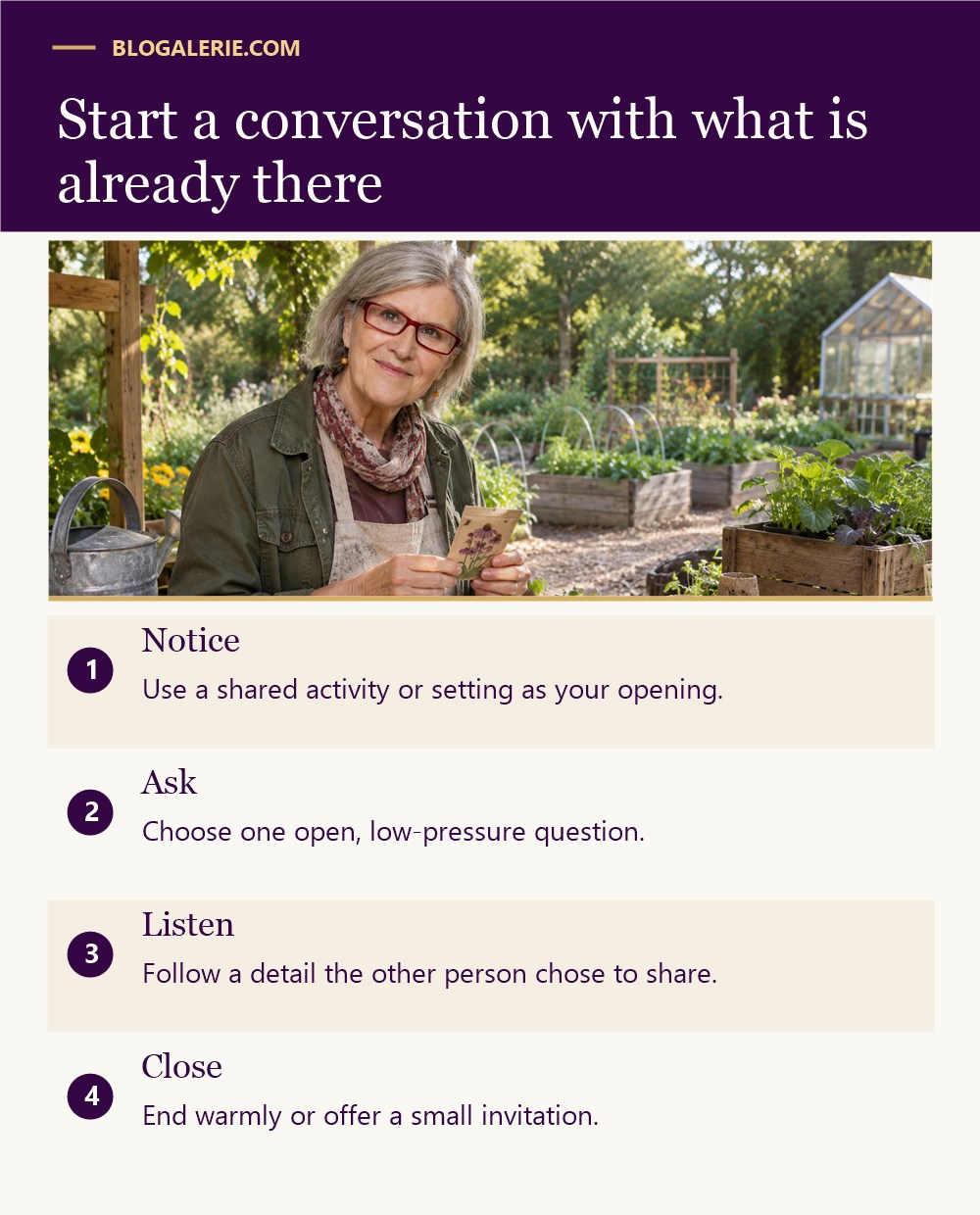
Read the visual guide as text
- Notice. Use a shared activity or setting as your opening.
- Ask. Choose one open, low-pressure question.
- Listen. Follow a detail the other person chose to share.
- Close. End warmly or offer a small invitation.
Invite a story with room to decline
Another way to get to know someone is by asking questions that give them an opportunity to share a story. But instead of asking someone to tell you everything about themselves, try focusing on one small experience.
Sometimes broad questions can make people feel uncomfortable because they don’t know where to begin or what kind of answer you’re expecting.
Asking someone to describe the most important experience of their life might feel overwhelming, especially if you’ve just met. But asking about something smaller can make the conversation feel much more relaxed.
Find out what someone would enjoy
Talking about things someone would like to try in the future can also be a fun way to get to know them. But these conversations don’t have to involve expensive vacations, major accomplishments, or big dreams. Sometimes people are more comfortable talking about smaller things they’ve been wanting to do, especially when they have busy schedules or other responsibilities.
Is there something new you’ve been wanting to learn?
What’s an activity you’ve always wanted to try?
Follow one detail at a time
The best kind of questions can come from details they have already told you. Listen to something they told you that they experienced or a feeling they seem to want to talk about. If they tell you they like to work on cars, you can ask them about the process of doing that. You don’t have to switch the conversation to their goals, travel or their childhood situation.
A good follow-up can be enough. You can ask something like, “What was that like?” or “What made you choose to do that?” Don’t ask the same question over and over again. The purpose is to understand what they’re telling you. You might find out that the subject that you talked about is something that they enjoy discussing further.
Leave privacy and communication preferences intact
Things like health, money, fertility, religion, trauma, relationship history, and family conflict might be important topics to talk about, but this doesn’t mean that you have permission to ask them, no matter where you’re at or how you’re feeling.
If people want to talk about a sensitive subject, let them bring it up. If something personal comes up, you can say something like, “Do you want to talk about it, or do you want to keep the conversation lighter?” Whatever answer they give you, accept it without making them explain their boundaries.
Someone can hate small talk but still like to keep their life private. If you choosing to skip talking about the weather doesn’t mean you’re open to talking about anything. This applies online as well. Don’t ask someone to share details that identify them, private screenshots, or another person’s story to keep the conversation interesting. Curiosity works best when it respects the limits of what the other person wants to share.
End warmly or offer a small next step
A good ending can be easy, such as “It was nice talking to you. I need to go.” If you share the same kind of activity, you might say something like “Maybe I’ll see you here again next week.”
If you want to see them again, make an invitation instead of treating a conversation as an automatic agreement. You could say something like, “Would you like to get coffee after class sometime?” This allows the person to make a choice.
You don’t have to keep talking to them until things get awkward. Ending while you still show interest can be a normal way to respect their time and energy. A short conversation can be complete, and it doesn’t have to include a final promise of the future to be worth your time.
Try these questions in a setting you already share
- At a class. “Which part would you like to try again?”
- At a gathering. “What have you been enjoying lately?”
- During an errand together. “Have you found anything that makes this part of the week easier?”
- In a familiar group. “What brought you here the first time?”
Give the answer time to land. You can offer a brief answer of your own and let the other person decide whether to continue.
For more ways to take part in community life, see the CDC’s guide to improving social connection.
Related reading. Making new friends as an adult.
Frequently asked questions
1. What can I ask besides “How are you?”
Ask about the immediate setting or a shared activity. At a library event, try “What brought you to this talk?”
2. What makes a good follow-up question?
Pick one detail the other person offered and ask about it. If they mention a project, ask what they’ve enjoyed about it so far.
3. How can I avoid sounding like I’m interviewing someone?
Offer a short detail about yourself and leave pauses. A question can lead to a shared exchange when both people have room to speak.
4. What if the other person gives a short reply?
Give them space. You can share a brief observation, change the topic or close the conversation kindly.
5. How can I end a conversation without making it awkward?
Use a simple line such as “I enjoyed talking with you. I’m going to get back to the event.” If you want to meet again, offer a small, specific invitation.