
Home can be a place to recover from a demanding day, but it can also contain unfinished jobs, noise and competing needs. A calmer home does not have to be spotless, spacious or expensive. Start with one thing that repeatedly makes daily life harder.
Perhaps you cannot find your keys, there is nowhere comfortable to sit or the washing-up always falls to you. A useful change makes that problem more manageable. It does not need to transform the whole house or remove every source of stress.
On this page
1. Choose one place to pause
Look for a seat, a corner of a room or a small area where you can spend a few comfortable minutes. You might move a bag off a chair, put a drink within reach or ask for a short period without interruptions. A separate room is not essential.
If you share your home, agree how people can use that space. A child’s toys, a mobility aid or someone else’s work equipment are not clutter simply because they are visible. Aim for access and comfort rather than a particular appearance.
2. Make daily tasks easier
Choose one small area you want to use more easily. Sort a few items into things to keep here, things that belong elsewhere and things you are ready to let go. Stop at a useful point; you do not have to finish a room.
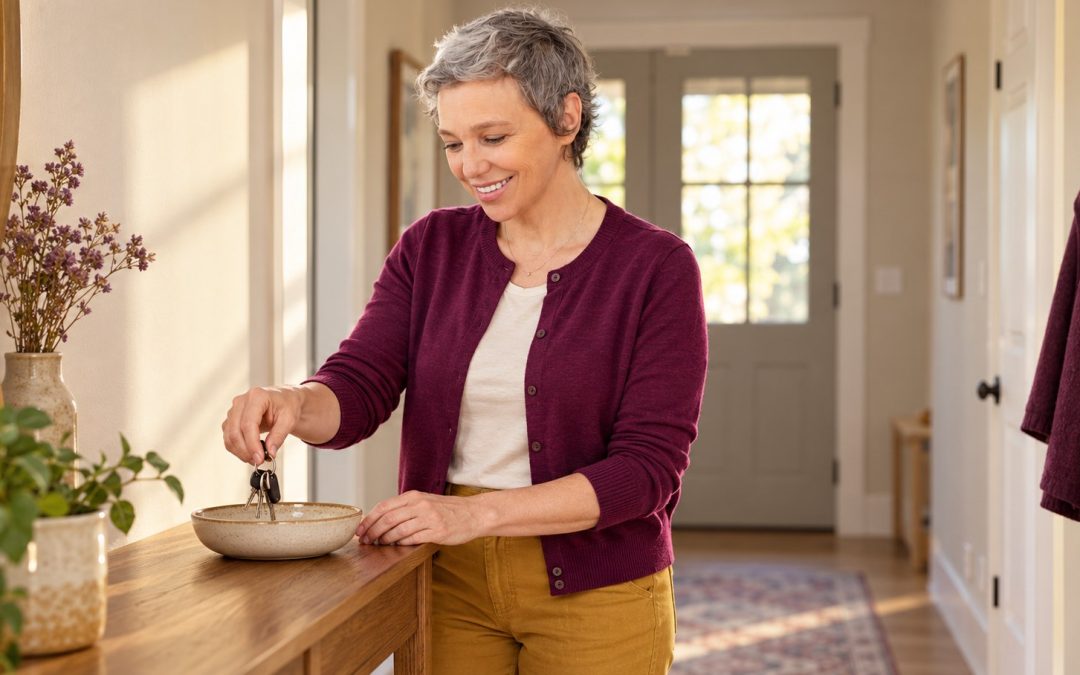
Hooks and baskets: a place for frequently used items can reduce searching. Try a container you already own before buying storage. Put it where you actually reach for the item, at a height that works for you.
Making the bed: do it if you enjoy the result and have the energy. Leaving it unmade says nothing about your character or ability to manage your life.
The kitchen: prioritise a usable preparation area and the items needed for the next meal. A realistic shared task might be, “Could you wash these plates while I put food away?” Finishing every job tonight may not be necessary.
3. Adjust light, colour and greenery to suit you
Notice whether lighting makes ordinary tasks comfortable. You could open a curtain when you want daylight or use a lamp for reading. Consider glare, privacy and other people’s needs before changing a shared space.
Colour choices: familiar colours or a favourite fabric may make a room feel more welcoming to you. Blue and green are not universally calming, and repainting is not a requirement. Try rearranging something you already like.
Plants: keep them if you enjoy caring for them and can choose ones suitable for your household. They are an optional interest, not a treatment or an essential purchase. A view outside or a favourite photograph may suit you better.
4. Make room for quiet without buying a cure
If alerts keep interrupting a break, consider silencing nonessential notifications for a time. Keep any contact or accessibility functions you need. Someone else may prefer gentle background sound; negotiate rather than assuming everyone needs silence.
Scents and essential oils: a fragrance you enjoy is a personal preference, not a promise of better sleep, more energy or relief from stress. Consider everyone who shares the air; an unscented space may be the more comfortable choice.
Aquariums: enjoy watching fish if that is already an interest, but do not buy an aquarium as a way to lower blood pressure or solve stress. It involves ongoing animal care, maintenance and cost. You can create a pleasant pause without one.
5. Share the work and review what helps
After trying one change, ask whether it saved effort or made a particular moment easier. Keep it, adjust it or leave it. A home that works for you may look different from an idealised picture.
If you live with others, discuss who notices jobs, plans them and does them. A calmer-looking room will not resolve an unfair workload, financial pressure or feeling unsafe. Those problems deserve attention in their own right.
The NHS advice on stress includes manageable targets and talking to someone. Seek qualified support if stress is persistently affecting daily life or you are struggling to cope.
While the article offers several actionable tips for reducing stress at home, it raises an interesting question regarding individual differences in coping mechanisms. What works for one person may not be effective for another due to varying personal circumstances and temperaments. For instance, while some might find solace in an aquarium, others may feel burdened by its maintenance. It might be beneficial to include a brief discussion about tailoring these strategies to fit one’s unique lifestyle and preferences. After all, creating a truly stress-free environment requires an understanding of oneself and one’s specific triggers.
‘Using sunlight’ was particularly resonant for me as it aligns with research suggesting natural light exposure positively influences mood regulation—something easily overlooked during hectic days indoors! While implementing such strategies might prove simple enough within one’s immediate control—like opening curtains—I’m curious how people manage external factors such as geographical location affecting available sunlight year-round? This nuance could further enrich discussions around practical implementation tailored specifically toward individual circumstances rather than presenting solutions through overly generalized lenses.
I appreciate the insights shared in this article regarding practical methods for reducing stress at home; however, I remain somewhat skeptical about their universal applicability. While techniques like using essential oils or letting sunlight into one’s living space seem beneficial on the surface level, I wonder if they genuinely lead to sustained decreases in stress levels over time? Additionally, integrating technology into our daily lives has become so pervasive that completely disconnecting from devices may not be practical for many individuals today—especially those balancing work demands remotely.
The article presents a rather comprehensive view on stress management within the home environment. I particularly appreciate the emphasis on creating a personal space dedicated to relaxation, which is often overlooked in the chaos of daily life. It is noteworthy that the suggestions range from practical steps, such as decluttering, to more serene practices like incorporating plants and essential oils. However, I wonder about the long-term efficacy of these strategies. Are there studies or empirical evidence supporting these recommendations? Further exploration into the psychological impacts of these changes could provide readers with a deeper understanding of how they might mitigate stress.
‘Color Pallet’ struck me because color psychology indeed plays a significant role in emotional responses! It would have been intriguing if examples illustrating color choices linked directly back towards relaxing experiences had been included throughout this article since visuals often shape our environments profoundly—whether consciously acknowledged or not! Moreover emphasizing personal agency when selecting colors tied closely back toward emotional regulation empowers readers through informed decision-making related directly within their homes.
‘Final Thoughts’ mention seeking professional help if stress becomes overwhelming—a point well taken and essential in any discussion surrounding mental health issues. However, considering societal stigmas around therapy and counseling remains pertinent; many individuals still grapple with the idea of seeking help externally due to preconceived notions about vulnerability or weakness associated with it. Highlighting resources available in various communities could enhance this article’s effectiveness by promoting open dialogues about seeking support as part of holistic self-care practices.
The discourse surrounding stress management often simplifies what is inherently a complex phenomenon influenced by numerous factors such as culture, socio-economic status, and personal history. The suggestions provided here are certainly useful but could benefit from a broader contextualization within modern societal pressures. Moreover, while de-cluttering can provide immediate relief, it may also serve as a temporary distraction from deeper issues that require attention. Thus, it would be prudent for readers to approach these recommendations with an awareness that they are part of a larger dialogue about mental health and well-being.
This article touches upon crucial aspects of stress management that are often neglected in contemporary discussions on mental health. The importance of establishing a peaceful home environment cannot be overstated; however, I find myself questioning how feasible it is for everyone to implement all these strategies simultaneously. For instance, many individuals face time constraints or financial limitations that may hinder their ability to create an idyllic space with plants or aquariums. Perhaps offering tiered approaches or prioritizing certain changes could empower more readers to take actionable steps toward improving their home environment.