

Making friends as an adult often starts with repeated, ordinary contact. You do not have to impress someone or turn every conversation into an audition. Create opportunities to meet, make a small invitation and allow the connection to develop at a pace both people choose.
Choose somewhere you can return
A regular class, volunteer activity, walking group, library event or shared-interest community gives people a reason to see each other again. Choose something you can realistically attend and would find worthwhile even if friendship develops slowly.
Consider cost, travel, accessibility, energy and the group’s atmosphere. A convenient, welcoming activity may be more useful than an impressive event you can rarely reach. Online groups can also offer repeated contact when in-person access is limited.
Begin with the shared situation
You can start with a simple observation or question about the activity: “Have you tried this class before?” or “What did you think of that part?” You do not need a clever opening.
Listen for what the person chooses to share, and offer a little about yourself. A friendly exchange may remain an acquaintance, which is valuable too. You do not have to decide immediately whether someone will become a close friend.
Make an invitation small and specific
Once there is some familiarity, suggest a manageable next step:
- “Would you like a coffee after next week’s class?”
- “I’m going to the free exhibition on Saturday. Would you like to join me?”
- “I enjoyed talking about that book. Would you like me to send you the event details?”
Offer a real choice and keep the first plan simple. A low-cost, public meeting can make it easier to accept or decline without a large commitment.
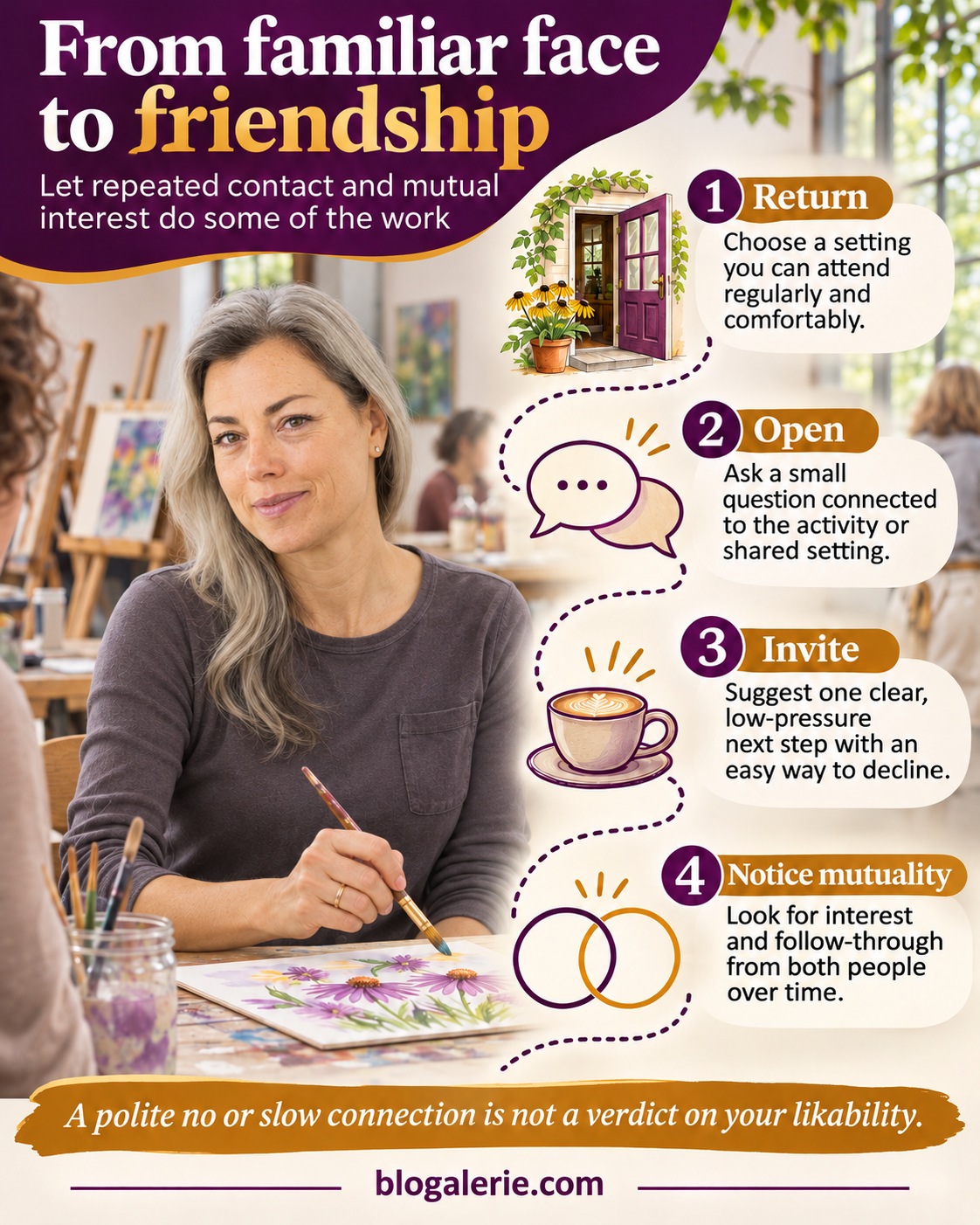
Read the visual guide as text
- Return. Choose a setting you can attend regularly and comfortably.
- Open. Ask a small question connected to the activity or shared setting.
- Invite. Suggest one clear, low-pressure next step with an easy way to decline.
- Notice mutuality. Look for interest and follow-through from both people over time.
A polite no or slow connection is not a verdict on your likability.
Look for reciprocity over time
Reciprocity does not require equal message counts. Notice whether both people show interest, make room for contact and follow through when they can. A person may be busy, disabled, caring for someone or managing circumstances you do not know.
A decline is not always personal. You can respond warmly once: “No problem. Perhaps another time.” If there is repeated unavailability without another suggestion, step back and keep meeting other people rather than increasing the pressure.
Share gradually and protect your boundaries
Closeness can grow through ordinary conversation before sensitive disclosure. You can enjoy someone’s company without sharing your address, finances, family conflict or private history early on.
For online friendships, be cautious about requests for money, personal documents or moving quickly into secrecy. Confirm what you can, use appropriate privacy settings and choose meeting arrangements that allow you to leave independently.
Being helpful can support a friendship, but generosity should not become the price of belonging. You are allowed to decline a favor and still seek connection.
Adapt the pace to your life
If you have limited energy, choose shorter meetings, quieter places or occasional messages. Tell a new friend what is realistic: “I’m slow with messages during the week, but I’d enjoy meeting next month.”
Try returning to one welcoming activity and making one appropriate invitation. Do not turn the process into a scorecard of likes, replies or social achievements. Friendship includes timing and mutual choice that you cannot control.
If loneliness or anxiety is seriously affecting daily life, qualified support may help alongside social opportunities. You do not need to become a different personality before you deserve companionship.