

Feeling empty can be difficult to explain. You might mean lonely, numb, disconnected from things you used to enjoy or unsure what matters to you. Begin with what the experience is like for you, rather than a judgement that you have failed to love yourself enough.
You do not have to discover one cause before asking for care or support. Notice what has changed in daily life, what feels difficult and whether there is someone who can help you think about the next step.
On this page
Find words for the experience
Ask what “empty” describes at the moment. Is it missing company, feeling little interest, going through routines without much feeling or not knowing what you want? Your own description can be more useful than trying to fit a checklist.
If it helps, note when you first noticed it, whether it comes and goes and how it affects sleep, eating, work or relationships. Keep the note brief enough to use; you do not need to analyse every part of your past.
The National Institute of Mental Health’s information on depression includes a persistent empty mood among possible symptoms. That does not mean that this feeling alone establishes a diagnosis. A qualified health professional can help assess persistent symptoms and consider what support fits.

Start with an ordinary care need
Look at what the next part of the day asks of you. Is there a meal to make easier, an appointment to keep, a comfortable place to rest or a task someone could help with?
Choose a smaller version if your energy is limited. A familiar meal, a brief pause or asking someone to sit with you can meet a need without requiring you to feel motivated first.
You do not have to complete a bath, exercise session or meditation practice to earn help. Keep following any existing care plan and ask the relevant professional if symptoms or difficulties are making it hard to do so.
Choose a manageable form of connection
If loneliness is part of the experience, consider the connection you miss. You may want a person who will listen, a familiar voice, shared activity or company that does not require a long conversation.
The NHS guide to loneliness offers options including keeping in touch and exploring groups around an interest. Choose what fits your access needs, budget and comfort rather than treating socialising as a test you must pass.
A specific request may help: “Could we have a short call this week?” or “Would you keep me company while I do this task?” If one person is unavailable, that does not decide whether you deserve support.
Explore meaning without forcing a feeling
Consider something you have valued, been curious about or found comfortable before. You might choose music, a familiar place, making something, spiritual reflection or time with a person you trust.
Try a small, low-pressure version and notice your response. The activity does not need to produce gratitude, happiness or a sudden sense of purpose to be worth considering. You can also decide it is not what you need today.
If gratitude or spiritual practice is meaningful to you, it can have a place alongside other support. It is not proof that a health concern has resolved, and difficulty feeling thankful does not make you responsible for feeling empty.
Consider professional support
If the feeling persists, worsens or affects everyday functioning, consider speaking with a qualified health professional. You can explain the experience in your own words and bring a few notes about when it began and what has changed.
You do not need to wait until you feel ready to give up or know which treatment to request. Ask what assessment or support may be appropriate, and discuss any questions about an existing treatment with the professional responsible for it.
If you feel unable to keep yourself safe or might act on thoughts of harming yourself, seek urgent help from local emergency services or a crisis service where you live. If possible, tell someone you trust that you need immediate support.
Make a plan for the next day
Choose one care need, one possible connection and one source of support if things become harder. The plan can be brief and can include asking someone else to help you arrange an appointment or manage a task.
Review whether the plan is usable rather than whether you completed it perfectly. If the first step was too much, make it smaller or seek more help.
Your experience deserves attention without a demand to become more positive, creative or grateful. Begin with what you need now, with room for care and a clearer understanding over time.
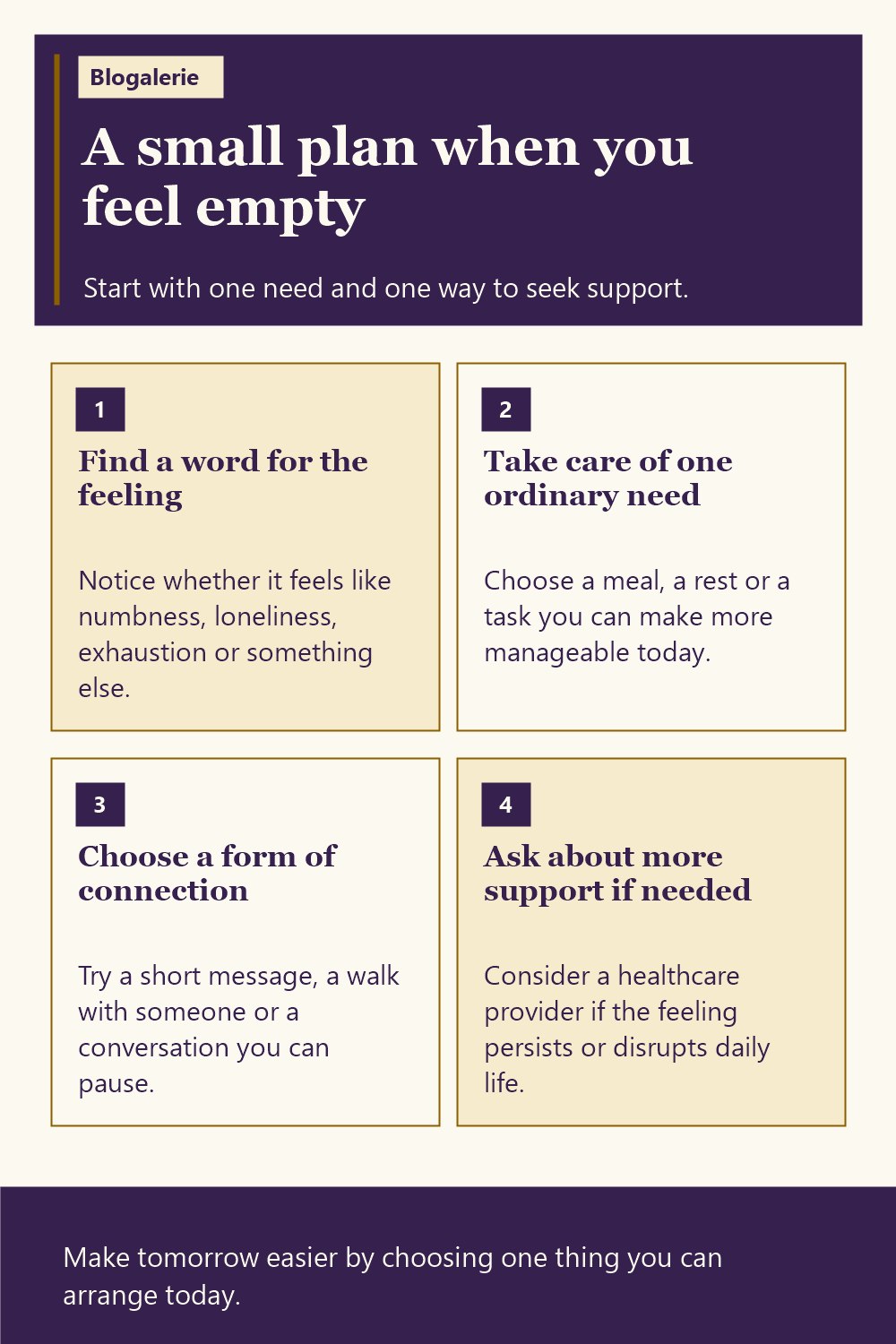
Read the infographic in text
A small plan when you feel empty Start with one need and one way to seek support.
- Find a word for the feeling Notice whether it feels like numbness, loneliness, exhaustion or something else.
- Take care of one ordinary need Choose a meal, a rest or a task you can make more manageable today.
- Choose a form of connection Try a short message, a walk with someone or a conversation you can pause.
- Ask about more support if needed Consider a healthcare provider if the feeling persists or disrupts daily life.
Make tomorrow easier by choosing one thing you can arrange today.
This article presents a thorough overview of the complexities surrounding feelings of emptiness. The link drawn between lack of love and inner voids stands out as an essential point; it prompts readers to reflect on their interpersonal relationships critically. Furthermore, the discussion on balancing oneself through activities like meditation or exercise serves as an accessible approach for individuals seeking relief from these feelings. However, I would argue that societal pressures often exacerbate these issues, complicating an already challenging path toward emotional fulfillment. Perhaps a discussion on societal impacts could enhance future explorations of this topic.
‘Feeling empty’ is an experience shared by many yet rarely discussed openly; therefore, bringing attention to its causes and symptoms is commendable work by the author here. Encouraging individuals to identify what they miss—not just emotionally but socially—is crucial for forming deeper connections moving forward into healthier future interactions with peers or loved ones while overcoming ingrained childhood beliefs about unworthiness during formative years.’
‘Exploring new things’ was an excellent suggestion made in this article—it encourages growth and opens avenues for discovering one’s interests or passions that may have been dormant due to existing mental blocks caused by inner emptiness. In modern society’s fast-paced environment, taking time to learn something new can serve not only as distraction but also reinvigorate one’s sense of purpose—a valuable insight worth contemplating further.
The article raises compelling points about the roots of inner emptiness, particularly the emphasis on emotional connections. It is intriguing how our early relationships shape our adult perceptions of self-worth and belonging. The suggestion to appreciate what we have feels especially relevant in today’s society, where we often overlook the simple joys in pursuit of more significant achievements. This concept aligns with many psychological theories that advocate for gratitude as a pathway to emotional well-being. Understanding oneself is indeed a complex journey that requires not just introspection but also external support, which this article highlights effectively.
‘The notion presented about gratitude struck me profoundly—the idea that acknowledging small joys can combat pervasive feelings associated with emptiness illustrates how mindset shapes experience significantly over time! Practicing gratitude cultivates resilience against negativity while fostering connection toward others too—an essential element when aiming towards overall psychological health! I’m eager to see more dialogues emerge surrounding these concepts—there’s much more depth here waiting to be explored.’
Inner emptiness is a profound issue that merits deeper exploration, as articulated in this piece. The notion that one’s childhood experiences profoundly influence adult feelings of void resonates with various psychological frameworks. It suggests that healing from such emptiness requires not only personal introspection but also relational engagement with others who can provide love and support. I find the recommendation to explore new things particularly insightful, as it aligns with theories regarding neuroplasticity and emotional resilience. In fostering curiosity and openness, one might uncover layers of self previously hidden beneath feelings of inadequacy.
I appreciate how this article addresses inner emptiness with both sensitivity and pragmatism. The symptoms listed are relatable and highlight the importance of self-awareness in recognizing one’s emotional state. The strategies suggested—such as enlisting help from others—underscore a crucial aspect often overlooked: the strength found in vulnerability. It would be interesting to consider how cultural differences shape perceptions of emptiness and approaches to healing. Overall, this piece serves as a valuable resource for those grappling with similar feelings while offering actionable insights for growth and recovery.