

Meditation can be a way to practise paying attention, pause during a demanding day or make room for spiritual reflection. You can explore it without expecting immediate calm, an empty mind or a particular emotional experience.
A useful starting point is a practice you can choose freely, adapt comfortably and stop when you need to. Notice what it offers in your daily life rather than measuring yourself against promises of a transformed brain or perfect wellbeing.
On this page
Decide what you want from a practice
Choose a modest aim: spend a little time away from a task, notice when your attention wanders or create a quiet moment for reflection. Your aim does not have to include becoming more productive or eliminating an uncomfortable feeling.
Consider what would make the practice workable. You might need a supported seat, an accessible place, a shorter recording or permission to keep your eyes open. A familiar activity can be a better starting point than an elaborate routine.
It is also reasonable to decide that meditation is not what you want to try today. Company, rest or help with a practical problem may better fit the need.
Choose an approach that fits you
Some people prefer a secular attention practice. Others meditate within a religious or spiritual tradition. Those traditions have different aims and teachings; they do not need to be treated as interchangeable techniques for producing the same result.
You might be interested in quiet attention, a repeated phrase, prayerful reflection or a practice taught by a community you trust. If a named approach interests you, look for a clear explanation of what it involves and whether it fits your beliefs and preferences.
Before paying for instruction, ask about the teacher’s training, the format, the cost and how you can adapt or leave the session. Be cautious about promises that one method will solve every difficulty.
Understand the evidence about the brain
The National Center for Complementary and Integrative Health’s overview describes research into meditation, mindfulness and brain activity. It notes that findings about brain function or structure are difficult to interpret and their practical meaning is unclear.
A brain scan can show a measured difference without telling you what it will mean for everyday life. Keep expectations about a brief practice modest, especially when a claim promises a particular physical or emotional result.
The same overview discusses possible benefits for some symptoms while explaining limits in the research. Programmes can include several kinds of support, so results from a structured programme do not automatically describe a brief exercise tried alone.
Keep health decisions grounded
If you want help with pain, substance use, blood pressure or other symptoms, discuss appropriate care with a qualified health professional. Meditation can be something to discuss alongside that care; a personal practice should not delay an assessment or replace an existing treatment plan.
A meaningful spiritual experience is yours to reflect on. It does not establish that a health condition has changed or that somebody else’s boundaries and choices no longer matter.
NCCIH also notes that negative experiences can occur and that research on harms is limited. Give yourself permission to stop a practice that is uncomfortable or distressing.
Find a comfortable focus
Choose something ordinary to return attention to: the contact of your feet with the floor, a sound in the room or a comfortable object you can see. If noticing your natural breathing feels comfortable, that is another option.
You do not need to force deeper breaths, hold your breath or keep your eyes closed. Let your position and focus suit your body and surroundings. Choose a place where you can pause safely rather than practising during driving or another task that needs your attention.
If an inward focus makes you uncomfortable, you can look around the room, notice an external sound or choose a different activity.
Try a brief practice
Give yourself a short period that feels manageable, without a target you must reach:
- Settle in a comfortable, supported position.
- Notice your chosen focus without trying to make it special.
- When attention moves elsewhere, gently return if you want to.
- Finish by noticing the room and deciding what you need next.
Thoughts can continue while you practise. You do not need to argue with them, disclose them or turn every thought into an insight. Returning attention once can be the whole exercise.
Notice your response
Afterwards, ask a practical question: was that comfortable, neutral, helpful or unpleasant? You might prefer a different focus, a shorter session, some movement or company.
If the practice increases fear, distress or a sense of disconnection, stop and orient yourself to your surroundings. Consider support from a qualified professional if the experience is persistent, worrying or difficult to manage.
Staying with distress for longer is not something you need to prove. A teacher should leave room for your choices rather than insisting that every difficult response is progress.
Decide what to keep
Keep a practice if it fits your values and offers something useful. You can make it occasional, adapt it or leave it. There is no need to compare your experience with a celebrity’s routine or someone else’s description of enlightenment.
Judge the practice by the place it can reasonably have in your life: a pause, a form of reflection or one support among others. You can value that experience without expecting it to solve every problem.
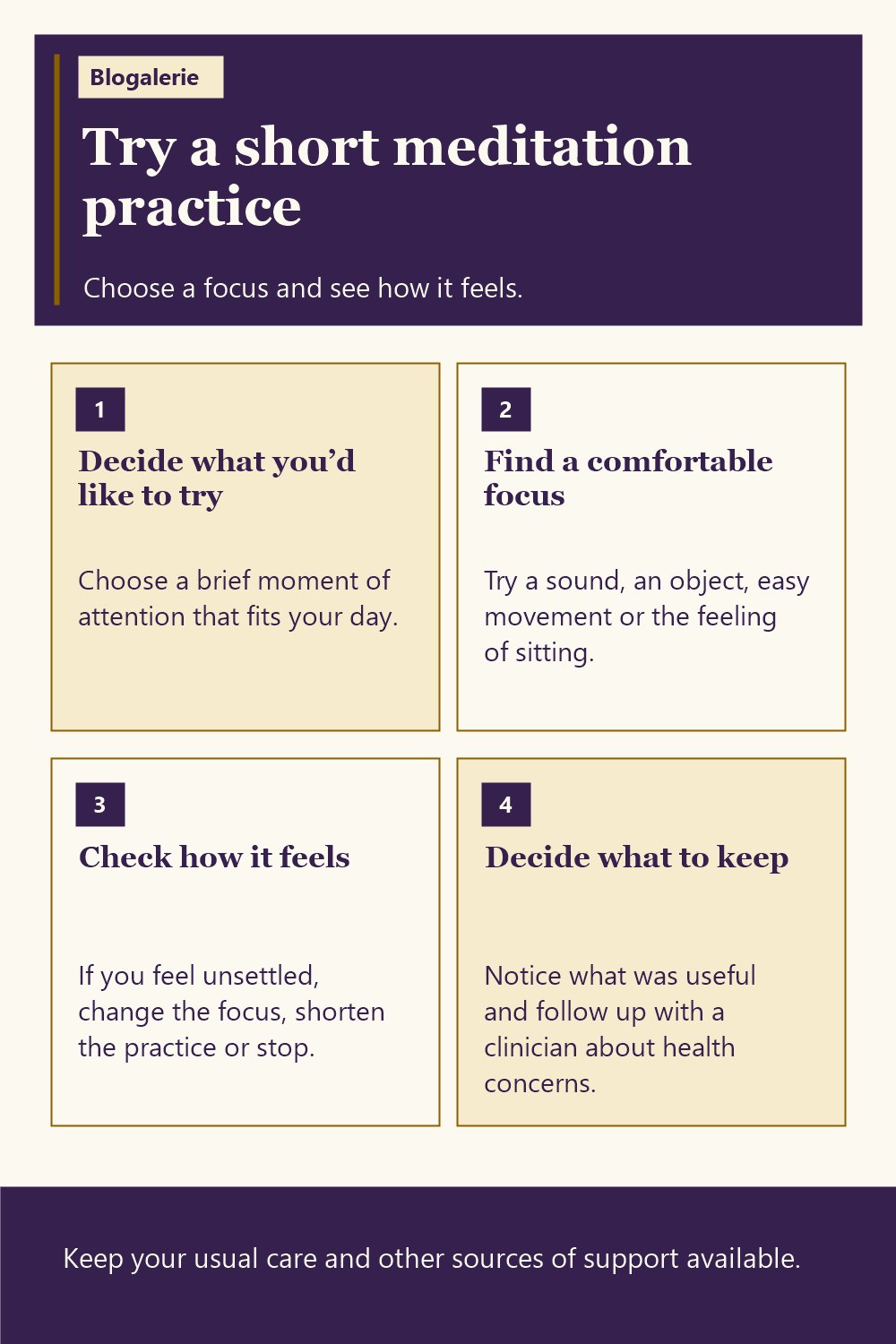
Read the infographic in text
Try a short meditation practice Choose a focus and see how it feels.
- Decide what you’d like to try Choose a brief moment of attention that fits your day.
- Find a comfortable focus Try a sound, an object, easy movement or the feeling of sitting.
- Check how it feels If you feel unsettled, change the focus, shorten the practice or stop.
- Decide what to keep Notice what was useful and follow up with a clinician about health concerns.
Keep your usual care and other sources of support available.
The exploration of meditation in this article raises important questions about its role in fostering personal growth and resilience. While many individuals may initially feel apprehensive about incorporating meditation into their routines, as highlighted, the long-term benefits seem worth the initial discomfort. The connection made between meditation and improved relationships is particularly noteworthy; it suggests that individual mindfulness can ripple outward, affecting interpersonal dynamics positively. I would be interested to see more empirical studies that delve deeper into these claims, especially regarding how different forms of meditation might influence specific aspects of emotional intelligence.
This article presents a compelling case for the benefits of meditation, especially in terms of mental well-being. The emphasis on how meditation can alleviate anxiety and enhance emotional stability resonates with me, particularly in today’s fast-paced world where stress is prevalent. I appreciate the mention of various meditation techniques; it serves as a reminder that there is no one-size-fits-all approach to mindfulness practices. This diversity allows individuals to explore what resonates best with them. I’m particularly intrigued by the potential link between meditation and improved cognitive functions such as memory and decision-making. It prompts further inquiry into how these practices could be integrated into daily life for enhanced productivity.
Meditation seems to serve as a bridge between ancient wisdom and contemporary psychological practices, allowing individuals from all walks of life an opportunity for introspection and healing. I appreciate how this article outlines different styles of meditation, presenting it as an accessible tool for personal development rather than an esoteric practice reserved for the few. This democratization of mindfulness is crucial in our modern context where mental health issues are increasingly acknowledged yet often stigmatized. Additionally, exploring how these meditative practices can foster empathy aligns with broader societal needs for connection amidst growing isolation.
“The idea that anyone can become more mindful through consistent practice is empowering but also daunting for beginners. The challenge lies not only in establishing a routine but also in navigating preconceived notions about what meditation should look like or feel like. The reference to keeping a journal while experimenting with different techniques is particularly useful; self-reflection may help clarify which methods resonate most deeply on an individual level. I wonder if incorporating technology—such as apps or online communities—could facilitate this exploration further by providing support networks for those starting their journeys.
The insights shared about the transformative power of meditation are both inspiring and thought-provoking. It’s interesting to note that successful figures like Oprah Winfrey utilize these techniques; their experiences lend credibility to the potential impact of mindfulness on achieving one’s goals. However, I am curious about the accessibility of such practices—are there barriers that prevent some people from engaging with them fully? Addressing issues like socioeconomic status or cultural perceptions surrounding mental health could provide a more nuanced understanding of who benefits most from these techniques.
“This article adeptly highlights not just the personal benefits of meditative practices but also their collective impact on society at large through enhanced empathy and focus among individuals. Such attributes are invaluable in today’s increasingly fragmented social landscape where genuine connection often feels elusive. By advocating for various forms of meditative engagement—from Yoga to Qigong—it encourages readers not merely to accept one method but rather explore multiple avenues suited to their preferences or lifestyles.
I find the argument surrounding the health benefits of meditation quite convincing yet necessitating further scrutiny. The association between regular meditation practice and enhancements in cardiovascular health or immune function invites a deeper dive into the physiological mechanisms at play. How exactly does a practice rooted in mental focus translate to tangible physical outcomes? Furthermore, exploring how various cultural perspectives on meditation shape its implementation could add depth to this conversation. As we consider mindfulness practices more broadly, it’s essential to critically assess both anecdotal experiences and scientific findings.